Choosing the Right Statistical Test: Where Do You Even Begin?
Understanding what matters before deciding how to analyze your research data.

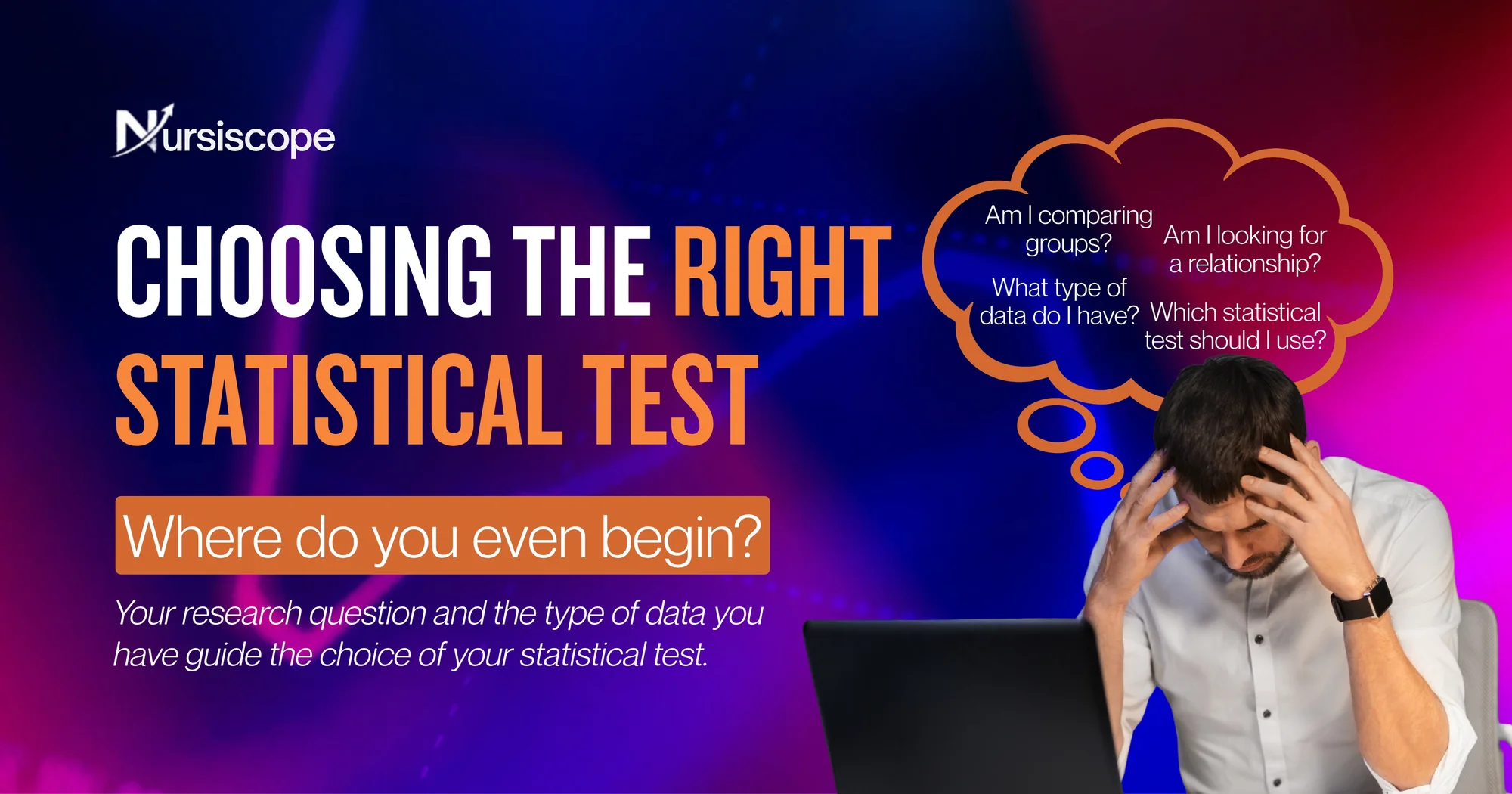
You've collected your data, organized your responses, and you're finally ready to begin your analysis.
Then comes a question that can leave you staring at your screen for longer than expected.
Which statistical test should I use?
Should it be a t-test, chi-square, ANOVA, or something else entirely?
Perhaps you've heard these terms before. Perhaps this is your first time encountering them.
Either way, choosing the right statistical test can feel confusing, especially when you're unsure where to begin.
But here's something worth knowing: you don't have to memorize every statistical test to understand how to approach the decision.
Sometimes, the best place to start is with a few simple questions.
What Exactly Are You Trying to Find Out?
Before worrying about which statistical test to use, think about what you want your research to tell you.
Are you trying to find out whether two groups are different? Are you interested in whether two things are related? Or do you want to understand what factors might help explain a particular outcome?
These are different questions, and they may require different approaches.
For example, imagine you're interested in understanding whether nurses who work longer shifts experience higher stress levels.
You could approach this by comparing stress levels between groups of nurses. You could also explore whether the number of hours worked is related to reported stress levels.
Both approaches may be useful, but they are not asking exactly the same question.
And that is why your research question should guide your choice of statistical test, not the other way around.
The Type of Data You Have Also Matters
Another important consideration is the kind of information you've collected.
Some data are numerical, such as age, weight, or blood pressure readings. Other data fall into categories, such as whether someone works a day or night shift.
Why does this matter?
Because different statistical tests are designed to work with different kinds of information.
Think of it this way: you wouldn't use the same approach to calculate someone's average age and determine the proportion of people who prefer night shifts.
The information is different, so the way you examine it may also be different.
You don't need to understand every type of data immediately. The important thing is recognizing that what you've collected influences how you should analyze it.
There's More to Choosing a Test Than Its Name
Sometimes, researchers choose a statistical test because they've seen it used in a similar study.
It's understandable. If another researcher used a particular method, it might seem reasonable to do the same.
But research questions that look similar don't always require the same analysis.
How the data were collected, the number of groups involved, whether the same people were measured more than once, and other characteristics of the study can influence which test is appropriate.
So, while reviewing previous studies can be helpful, copying their statistical methods without understanding why they were used may lead to mistakes.
The goal is not simply to find a test that sounds familiar. It's to choose one that is suitable for your research question and data.
Getting Results Is One Thing. Understanding Them Is Another.
Let's say you've successfully selected a statistical test and run your analysis.
Your software produces tables, numbers, and results.
Great! But what do they actually mean?
This is another part of data analysis that deserves attention.
A statistical result may suggest a difference or relationship, but interpreting that finding requires more than looking at a single number.
You need to understand what the result tells you, what it doesn't tell you, and how it relates to the question you originally wanted to answer.
After all, the purpose of research isn't simply to produce statistical results. It's to make sense of evidence and communicate meaningful findings.
So, How Do You Become Better at Choosing Statistical Tests?
Like many research skills, choosing appropriate statistical tests becomes easier with learning and practice.
You can begin by understanding the purpose of different analytical methods rather than trying to memorize their names.
Learn how to recognize the kinds of questions you're asking, understand the information you've collected, and gradually become familiar with the methods available.
Most importantly, don't be afraid to ask questions.
You don't have to become a statistics expert overnight. Having access to guidance, practical demonstrations, and opportunities to work with data can help you build confidence over time.
And that's where structured learning can make a difference.
Build Your Confidence With the Nursiscope Data Analysis Hub
At Nursiscope, we recognize that developing practical data analysis skills can be challenging, particularly when you're learning how to select appropriate methods, interpret results, and use statistical software.
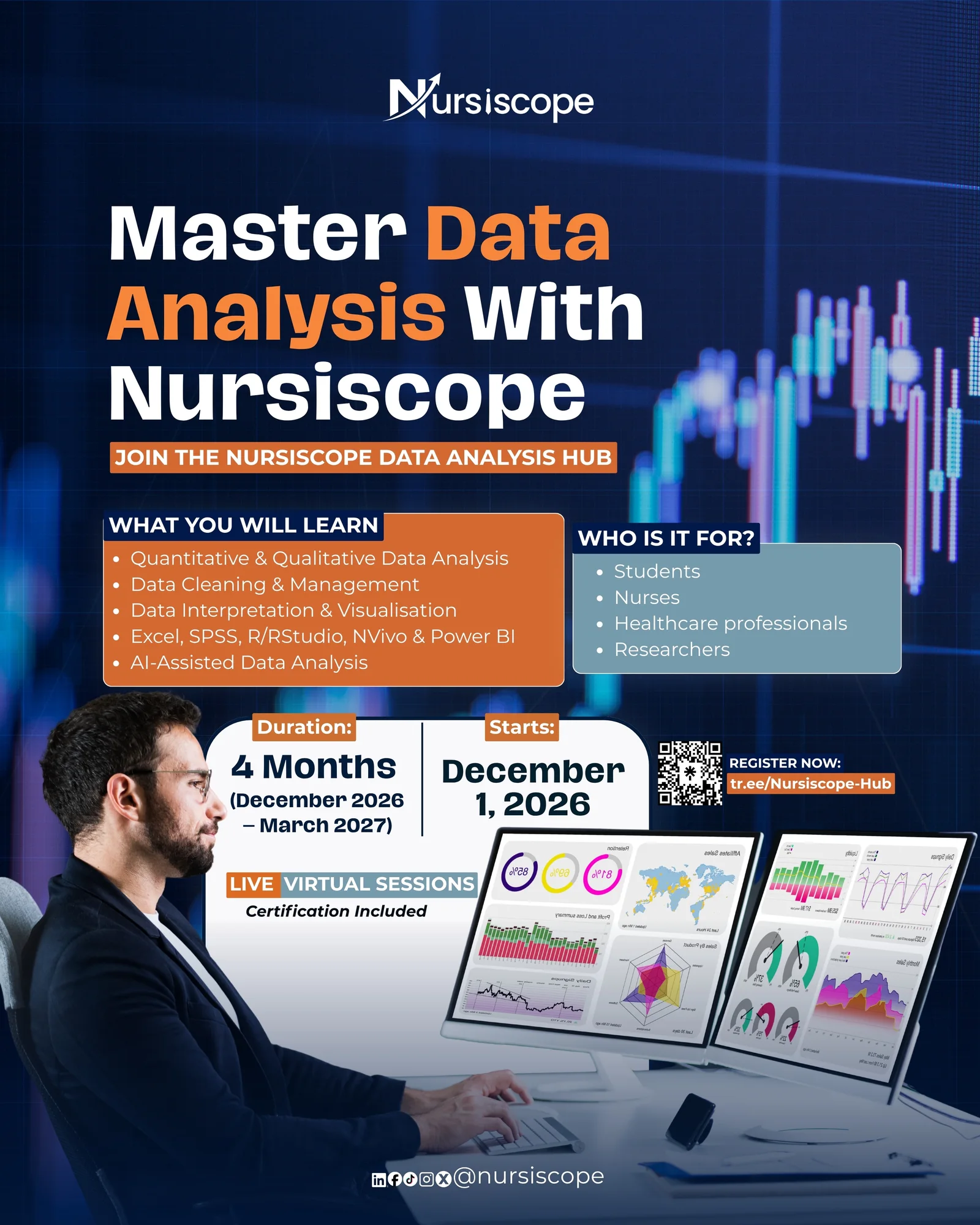
That's why we're introducing the Nursiscope Data Analysis Hub, a four-month virtual training program beginning in December 2026.
Designed for students, nurses, healthcare professionals, researchers, and public health professionals, the program will provide opportunities to develop practical skills in quantitative and qualitative data analysis, data cleaning and management, interpretation, visualization, and responsible AI-assisted analysis.
Participants will also gain experience with tools including Excel, SPSS, R/RStudio, NVivo, and Power BI.
Beyond the training, the hub will provide opportunities to ask questions, share knowledge, receive peer support, collaborate, and build professional connections.
Whether you're completely new to data analysis or looking to strengthen your existing skills, the program offers an opportunity to learn and grow.
Ready to become more confident working with data?
Registration for the Nursiscope Data Analysis Hub is open.
Remember, choosing the right statistical test isn't about knowing every method available. It's about understanding your research question, knowing your data, and learning how to make informed analytical decisions.
Nursiscope
Where Nursing Meets Innovation